

Traverse City Embraces Historic Lessons to Enhance Modern Urban Mobility |
Integrating Past Innovations with Future Infrastructure for Community Connectivity |
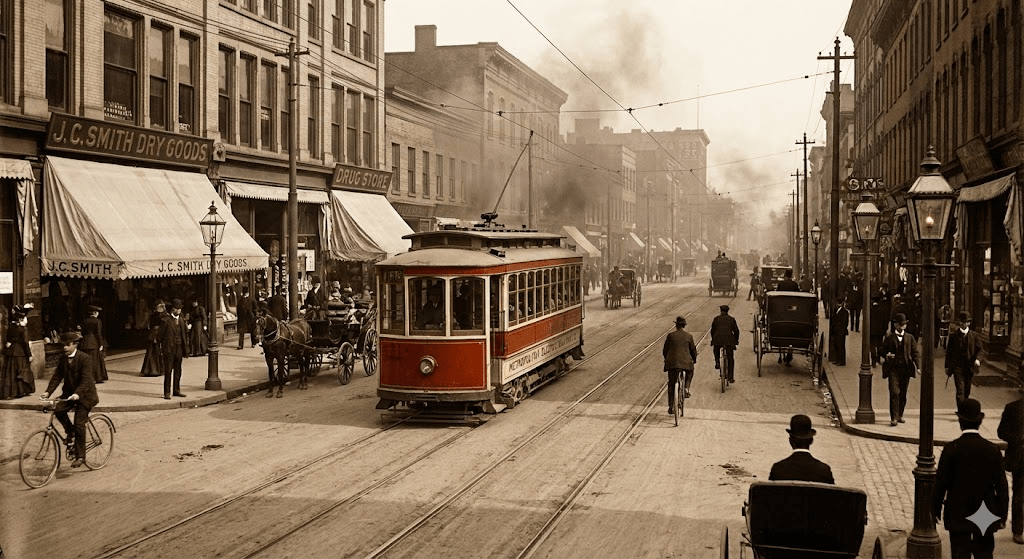
In 1888, the advent of electric streetcars revolutionized urban mobility, offering cities a structured and dependable means of connecting communities.
Traverse City, shaped by its unique geography and seasonal rhythms, has long recognized the importance of accessible infrastructure in fostering community connectivity.
The electric streetcar served as a vital link in cities, reducing isolation and encouraging participation by enabling seamless movement between home, work, and communal spaces.
In environments where natural features influence movement, thoughtful city planning becomes essential to overcome constraints and enhance accessibility.
Traverse City's character reflects a commitment to integrating infrastructure that strengthens community ties rather than merely expanding physical boundaries.
Recent developments underscore this commitment. In 2025, the Michigan Department of Transportation (MDOT) initiated a $25.8 million project to rebuild 2.2 miles of M-72 (Grandview Parkway) and M-22 (Bay Shore Drive), incorporating a new roundabout at the M-72/M-22 intersection and upgrading pedestrian facilities to meet Americans with Disabilities Act standards.
Additionally, the Bay Area Transportation Authority (BATA) expanded its services by opening a new Park-n-Ride facility in Garfield Township, providing 40 daily parking spaces with direct connections to downtown Traverse City.
These initiatives reflect a broader understanding that urban mobility is not solely about transportation but about fostering a sense of belonging and community engagement.
By honoring the principles established in 1888, Traverse City continues to prioritize accessible infrastructure and community connectivity in its city planning efforts. |
0 Comments
Join the conversation
Be the first to comment
Share your thoughts above.